Leave Your Message
Assembly Conveyor Systems now sit at the center of China’s modern manufacturing upgrades. They move components between workstations with controlled speed, repeatable positioning, and measurable takt time. Automotive, electronics, appliance, and battery factories increasingly require flexible conveyor layouts. These systems must also support traceability, ergonomic workstations, and quick product changeovers.
According to the International Federation of Robotics’ World Robotics 2024 report, China installed 276,288 industrial robots in 2023. This represented more than half of global installations. More robots require better material flow. Conveyor lines connect robotic cells, inspection stations, and manual assembly areas. The investment is practical, not decorative. A poorly aligned conveyor can create seconds of delay at every station.
Market research also confirms this direction. MarketsandMarkets’ Conveyor System Market report identifies automation, e-commerce, and manufacturing modernization as major growth drivers. Grand View Research similarly highlights rising demand for automated material handling and modular conveyor equipment. These findings help explain China’s expanding supplier base. However, market size figures vary by research method and product definition. Readers should check each report’s scope carefully.
This guide examines China’s top Assembly Conveyor Systems manufacturers through engineering capability, customization, quality control, export experience, and after-sales support. It considers details such as belt tracking, pallet accuracy, motor efficiency, safety guarding, and spare-parts availability. Factory visits and application testing still matter. Catalog claims alone are not enough. No supplier is perfect, and a ranking can oversimplify complex projects. The strongest choice depends on product weight, cycle time, cleanroom needs, integration standards, and total operating cost.
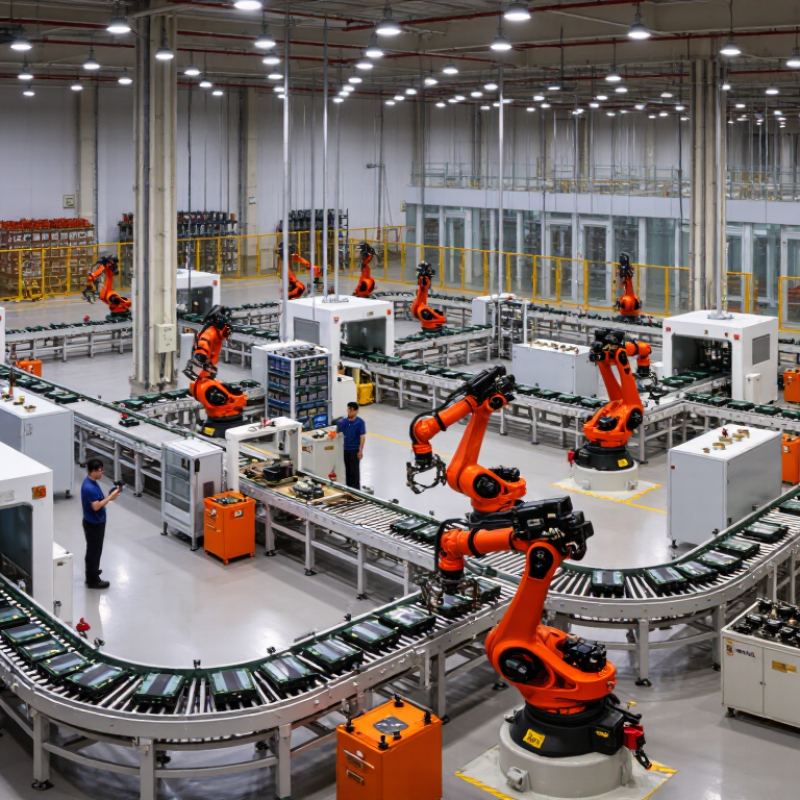
China’s assembly conveyor systems are shifting from simple transport lines to connected production infrastructure. They serve electronics, appliances, vehicles, and general machinery plants. Their core function is controlled material flow. Belt, roller, chain, and pallet conveyors manage speed, spacing, accumulation, and workstation access. Selection depends on load weight, surface sensitivity, takt time, and cleanliness requirements.
The International Federation of Robotics reported 276,288 industrial robots were installed in China during 2023. China represented 51% of global robot installations, according to World Robotics 2024. This automation density increases demand for conveyors that communicate with sensors, programmable controllers, and robotic stations. A conveyor is no longer only a moving floor. It can support barcode tracking, automatic inspection, buffer storage, and precise pallet positioning. These functions reduce manual handling and help stabilize repetitive assembly work.
MHI’s 2024 Annual Industry Report found that 74% of surveyed supply-chain leaders planned to increase technology investment. However, investment alone cannot fix poor line balance. A faster conveyor may simply create larger queues. Design teams sometimes overvalue speed. Practical projects need adjustable drives, emergency access, guarded transfer points, and easy-clean surfaces. Energy use also deserves attention, especially when conveyors run continuously. Not every factory needs a highly complex system. A modular layout may perform better when product models change frequently. That is the gap. Cost, maintainability, and operator feedback still require careful review.
| System Category | Operating Principle | Typical Assembly Applications | Common Conveyor Structure | Typical Speed Range | Typical Load Characteristics | Core Functions | Key Selection Considerations |
|---|---|---|---|---|---|---|---|
| Belt Assembly Conveyor | A continuous belt transports parts, workpieces, or assembled products between stations. | Consumer electronics, small appliances, electrical components, packaging, and light mechanical assembly. | Aluminum or steel frame with PVC, PU, rubber, or modular plastic belt. | Approximately 5–30 m/min for many assembly lines | Light to medium loads; the exact capacity depends on belt width, drive power, and product spacing. | Material transfer, workstation linking, buffering, accumulation, and visual inspection support. | Product surface, belt material, required cleanliness, speed control, and allowable product contact pressure. |
| Roller Assembly Conveyor | Products move on powered or gravity-driven rollers that support the underside of the load. | Automotive components, appliances, cartons, pallets, metal parts, and heavier subassemblies. | Steel or aluminum frame with steel, stainless-steel, or polymer rollers. | Approximately 5–25 m/min in controlled assembly applications | Medium to heavy loads with a relatively flat and stable base. | Transfer, accumulation, pallet movement, workstation positioning, and line-side logistics. | Product base geometry, roller pitch, load distribution, noise level, and need for zero-pressure accumulation. |
| Chain Conveyor | One or more driven chains carry products directly or support pallets and fixtures. | Automotive assembly, metalworking, industrial equipment, pallets, and fixture-based production. | Heavy-duty steel frame with single, twin, or multiple chain strands. | Approximately 3–20 m/min for many assembly operations | Medium to heavy loads, especially products mounted on pallets or carriers. | Positive product movement, indexing, pallet transfer, lifting-interface access, and synchronized station feeding. | Chain type, pallet design, lubrication requirements, impact loading, and maintenance accessibility. |
| Slat Conveyor | Linked metal or engineering-plastic slats form a continuous carrying surface. | Bottling, personal care products, food-related packaging, containers, and products requiring stable support. | Stainless steel or painted steel frame with plastic or metal slats. | Approximately 5–30 m/min, depending on product and layout | Light to medium loads; suitable for products with varied shapes when properly guided. | Continuous transport, accumulation, turning, elevation changes, and container handling. | Cleaning requirements, product stability, transfer gaps, guide-rail design, and wear resistance. |
| Timing-Belt Conveyor | A toothed belt provides synchronized movement and accurate positioning of workpieces or fixtures. | Precision assembly, electronics, small machinery, battery modules, and automated inspection cells. | Aluminum extrusion frame with toothed belts, pulleys, and precision guides. | Approximately 5–60 m/min, subject to accuracy and payload requirements | Light to medium loads requiring repeatable pitch and controlled positioning. | Indexing, synchronization, precise spacing, robotic handoff, and station-to-station positioning. | Positioning accuracy, belt tension, payload inertia, acceleration, fixture weight, and control-system compatibility. |
| Pallet Conveyor System | Dedicated pallets or fixtures carry products through standardized assembly stations. | Automotive parts, electrical equipment, medical devices, and complex multi-step assembly. | Chain, belt, roller, or hybrid conveyor with reusable pallets and locating units. | Approximately 2–15 m/min in indexed or station-based production | Medium to heavy products; the pallet distributes load and improves repeatability. | Workpiece positioning, assembly sequencing, traceability, buffering, testing, and ergonomic presentation. | Pallet repeatability, locating accuracy, fixture standardization, product changeover, and return-path design. |
| Overhead Conveyor | Carriers suspended from an overhead track transport products above the production floor. | Paint shops, surface treatment, garment handling, automotive trim, and floor-space-sensitive assembly. | Enclosed track, trolley chain, carriers, drive units, and load-support attachments. | Approximately 2–15 m/min for many controlled processes | Load capacity depends on carrier spacing, track configuration, and drive system. | Floor-space optimization, routing through multiple process stages, hanging transport, and process dwell time. | Ceiling height, building structure, carrier load, product orientation, access for operators, and safety guarding. |
| Flexible Conveyor | A configurable conveyor expands, contracts, bends, or relocates to suit changing workflows. | Temporary assembly cells, warehouses, shipping areas, order preparation, and mixed-production environments. | Telescopic, skate-wheel, roller, or modular conveyor sections with casters. | Approximately 5–20 m/min, depending on configuration and drive type | Light to medium loads with compatible bases or containers. | Rapid layout changes, temporary line extensions, loading and unloading, and short-distance transfer. | Required flexibility, floor condition, load stability, storage position, and manual handling interaction. |
| Accumulation Conveyor | Products are temporarily stored on the conveyor while upstream and downstream processes operate at different rates. | Assembly buffering, testing, packaging, inspection, and asynchronous workstation balancing. | Zero-pressure roller, belt, chain, or accumulating pallet conveyor. | Approximately 3–25 m/min during transport and accumulation cycles | Load depends on product dimensions, accumulation length, and drive-zone capacity. | Production buffering, line balancing, controlled release, jam reduction, and process decoupling. | Accumulation pressure, product spacing, sensor layout, release logic, and available buffer length. |
| Cleanroom Assembly Conveyor | Uses materials, drives, and construction methods selected to limit particles and simplify cleaning. | Electronics, semiconductor-related handling, medical products, laboratory equipment, and precision assembly. | Stainless steel or anodized aluminum frame with low-particle belts and enclosed or protected components. | Approximately 2–20 m/min, depending on cleanliness and process requirements | Usually light to medium loads with controlled product handling. | Clean transfer, controlled positioning, low-particle operation, inspection integration, and automated handoff. | Cleanroom classification, outgassing, belt material, lubrication, electrostatic control, and washdown requirements. |
| Modular Assembly Line | Combines standardized conveyor modules, workstations, fixtures, sensors, and controls into a configurable line. | Mixed-model manufacturing, contract assembly, electrical products, appliances, and industrial components. | Modular aluminum profiles, belt or roller sections, adjustable workstations, and plug-in controls. | Typically adjustable from approximately 3–30 m/min | Designed around product-specific fixtures, workstation loads, and takt-time requirements. | Scalable production, ergonomic work presentation, changeover support, inspection, traceability, and automation integration. | Takt time, product variety, modularity, future expansion, operator ergonomics, and control architecture. |
| Control and Automation Layer | Sensors, variable-frequency drives, programmable controllers, and human-machine interfaces coordinate conveyor operation. | Applicable across automated and semi-automated assembly lines. | Photoelectric sensors, proximity sensors, encoders, PLCs, VFDs, servo drives, safety relays, and HMIs. | Set according to takt time, positioning accuracy, product handling, and process limits | Control architecture is selected according to conveyor load, motor size, station count, and required response time. | Start/stop control, speed regulation, indexing, synchronization, fault detection, recipe management, and data collection. | Communication protocol, safety functions, diagnostic capability, cybersecurity, maintainability, and integration with MES or SCADA. |
| Safety and Ergonomics | Protective devices and workstation design reduce exposure to moving parts and repetitive handling risks. | All assembly conveyor environments, particularly lines with operators and automated machinery. | Guarding, emergency-stop devices, safety switches, light curtains, adjustable workstations, and access controls. | Determined by risk assessment and safe operating requirements | Safety design considers product load, moving mass, pinch points, transfer height, and operator access. | Emergency stopping, access protection, safe restart, ergonomic height adjustment, and controlled operator interaction. | Applicable local regulations, risk assessment, guarding layout, emergency-stop coverage, noise, and operator reach zones. |
| Industry Performance Indicators | Operational performance is evaluated through production, quality, availability, and maintenance measures. | Used for comparing and improving assembly conveyor system performance without relying on supplier brand data. | Digital monitoring, maintenance records, sensor feedback, production counters, and quality systems. | Measured against planned takt time and required throughput | Tracked through payload, cycle time, stoppage frequency, and accumulation behavior. | Throughput monitoring, OEE analysis, downtime tracking, preventive maintenance, and continuous improvement. | Data accuracy, sensor coverage, reporting frequency, maintenance strategy, spare-parts planning, and total cost of ownership. |