Choosing a conveyor in 2026 is not simply a matter of comparing belt speed or equipment price. Conveyor System Design must fit the material, production rate, floor layout, and maintenance skills available on site. A carton line with frequent product changes needs different controls from a dusty bulk-material route. Small details matter: transfer-point height, belt-cleaning access, and the space beside a motor can shape daily performance.
The MHI 2024 Annual Industry Report found that 55% of surveyed supply-chain professionals planned to adopt robotics and automation within five years. That figure describes a broad industry trend, not conveyor purchases alone. Still, it signals why designers should check how conveyors will connect with sensors, controls, and other equipment. Manufacturing-systems expert Taiichi Ohno wrote, “We are reducing that time line by removing the non-value-added wastes,” in The Toyota Production System. His principle applies to conveyor routes: unnecessary transfers and waiting can add cost without moving more useful product. But no layout removes every compromise. A design that looks efficient on paper may be awkward to clean or repair. That deserves a second look.
This guide explains how to compare capacity, drive choices, safety provisions, energy use, and lifecycle costs before selecting a system. It also considers future changes, because a conveyor that fits today’s output may constrain tomorrow’s line. The right choice is practical, measurable, and maintainable. Not merely impressive.

Define the flow before selecting conveyor geometry. Record peak and average throughput, expressed in units per minute, plus item dimensions, weight, and orientation. Count every handoff. Note whether cartons arrive steadily or in uneven waves, and measure the longest, heaviest, or most fragile loads.
A 600-millimeter carton that rotates at a transfer point can cause more trouble than a higher average rate suggests. Real shifts vary. Include start-up surges, cleaning windows, and planned downtime; a system sized only for yesterday’s average may become a bottleneck during seasonal peaks.
Map the route from induction to discharge, including elevation changes, merges, accumulation zones, and operator access. Then document operating conditions: temperature, dust, moisture, washdown frequency, available floor space, and expected hours per day.
MHI’s 2024 Annual Industry Report found that 55% of surveyed supply-chain leaders planned to increase technology investment. That signals growing interest, not proof that automation fits every facility. Treat the figure as context, not a design target.
Walk the proposed route with operators and maintenance staff; a tight turn on paper may block a pallet jack in practice. Some measurements will be imperfect. Mark assumptions clearly, then validate them with samples from a representative production shift.
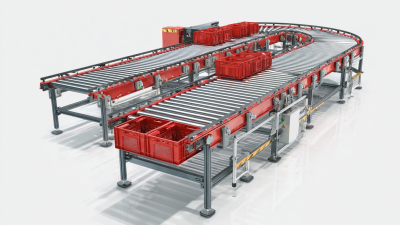
Choosing a conveyor system starts with the building, not a product brochure. Measure usable floor area, ceiling height, column spacing, doorways, and floor load limits. Mark pedestrian routes, forklift lanes, emergency exits, and maintenance access. A plan may look open, but a support column can block a turn or obstruct a sensor. Walk the proposed route during a busy shift. Notice where pallets queue, workers cross, and materials change direction. These details can reshape a layout.
Tips: Use a tape measure and a simple site sketch. Mark fixed obstacles in red. Leave room to reach motors, guards, and transfer points. Measure twice; older drawings may be wrong.
Compare the route with actual product dimensions and the largest load, including pallets or containers. Check whether overhead space allows safe clearance beneath lights, pipes, and sprinklers. If floor space is tight, an elevated section may help, but it can complicate access and servicing. Do not squeeze every gap into the design. A scaled drawing can miss awkward turns, changing traffic, or seasonal storage. Review the layout with operators and a qualified conveyor engineer before finalizing it.
Choose a conveyor by the product, route, and operating pace—not by habit. Belt conveyors suit steady movement of cartons or bulk goods. Roller conveyors work well for rigid packages, especially where gravity can move them between stations. Chain or overhead systems can handle heavier loads, but they may need more space and maintenance access.
Configuration changes performance. A straight line is simple to inspect; curves and merges save floor space but create more transfer points. Measure package size, weight, peak throughput, and accumulation needs using real operating data. Then compare fixed-speed controls with variable-speed drives and sensor-based zones.
Sensors can release items only when downstream space is clear. Useful, but not infallible: dust, reflective packaging, or poor placement can cause missed readings. Test with actual products.
Map the busiest hour, not the daily average. Check emergency stops, guarding, cleaning access, and spare-part availability. Ask operators to review the layout; a technically elegant route may still block a cart or create awkward reaching. Allow room for future changes, but avoid buying capacity that sits idle.
How to Choose the Best Conveyor System Design in 2026?
Evaluate Safety, Reliability, Energy Use, and Digital Integration
Start with the hazards people can actually encounter: pinch points, moving belts, and hard-to-reach emergency stops. ANSI/ASSP B20.1 provides safety guidance for conveyor design and operation. Check guarding and stop access at transfer points, not only on drawings. Reliability also depends on practical details: belt tracking, accessible rollers, and available spare parts. A system that is difficult to inspect may look efficient on paper, but cause avoidable stoppages in daily use.
Measure energy use under real operating conditions, including idle periods and partial loads. The U.S. Department of Energy’s Improving Motor and Drive System Performance report estimates that motor-driven systems account for about 68% of U.S. manufacturing electricity use; this includes far more than conveyors. Digital monitoring can help identify rising motor temperatures or repeated belt misalignment. McKinsey’s 2017 predictive-maintenance analysis estimates potential downtime reductions of 30–50%, but results depend on data quality and implementation. A neat dashboard can still miss a poorly placed sensor.
Tips: Walk the route with operators before selecting equipment. Record load, speed, stops, and cleaning needs. Compare energy readings and maintenance access during a real shift. Keep the design simple where possible; more sensors do not automatically mean better decisions.
How to Choose the Best Conveyor System Design in 2026?
Verify Lifecycle Costs and Validate the Design Before Installation
A low purchase price can disguise costly energy use, maintenance, and downtime. Compare designs over their expected service life, not just at purchase. The U.S. Department of Energy’s industrial motor-systems market assessment found that motor-driven systems account for about 54% of electricity use in U.S. manufacturing. That figure covers more than conveyors, but it makes motor efficiency worth checking. Model operating hours, load patterns, belt friction, and standby time. Small assumptions matter.
Include replacement belts, bearings, controls, labor, and planned shutdowns in the lifecycle-cost model. MHI’s 2024 Annual Industry Report found that 88% of surveyed supply-chain professionals expected technology investment to increase over the following two years; 55% planned to invest more than $1 million. These are intentions, not proof that a particular system will pay back. Build a sensitivity check around energy prices, throughput, and maintenance intervals. A neat forecast can still be wrong.
Validate the design before installation with a layout review and a realistic flow simulation. Test peak loads, awkward package sizes, merge points, and emergency stops. Then run a site acceptance test using representative products. Watch a carton pause at a transfer point. Does accumulation spill backward? Can technicians reach a jam safely? Record cycle times and motor current, then compare them with the design assumptions. One weak spot is easy to overlook. Fixing it after commissioning is usually harder.
Compare conveyor types against the actual product, route, throughput, operating schedule, and site conditions. The cost drivers and validation checks below are planning guidance; final specifications depend on the application and detailed engineering.
| Conveyor system type | Typical application fit | Key design considerations | Lifecycle cost drivers to verify | Pre-installation validation |
|---|---|---|---|---|
| Belt conveyor | Continuous movement of bulk materials or unit loads along straight or inclined routes. | Product dimensions and weight, belt width and speed, incline, loading and discharge points, dust control, and guarding. | Belt and splice replacement, drive energy, idler and pulley maintenance, cleaning, and downtime during repairs. | Check capacity at the required operating rate; verify belt tracking, loading geometry, incline performance, emergency stops, and access for belt replacement. |
| Gravity roller conveyor | Suitable for compatible cartons, totes, or other unit loads moving downhill or across manually operated accumulation areas. | Load base, roller spacing, route slope, product stability, and whether manual pushing or controlled stopping is required. | Roller and bearing replacement, frame wear, cleaning, and labor associated with manual movement or jams. | Run representative loads through curves and transitions; confirm that products start, travel, and stop safely under expected load conditions. |
| Powered roller conveyor | Unit-load transport where powered movement, accumulation, or controlled transfers are needed. | Load dimensions and weight, zone layout, accumulation logic, transfer points, speed control, and system controls. | Motors or drive components, rollers, sensors, controls, energy use, spare parts, and the cost of troubleshooting electrical or control faults. | Test the heaviest and smallest intended loads, accumulation behavior, sensors, restart sequences, transfers, and recovery from a stopped zone. |
| Chain conveyor | Heavy unit loads, pallets, fixtures, or applications that require a positive, fixed-path drive. | Load support and orientation, chain type, lubrication method, transfer design, guarding, and maintenance access. | Chain and sprocket wear, lubrication, drive components, energy, inspection labor, and production interruption for repairs. | Confirm load capacity and transfer alignment; review chain tensioning, lubrication access, guarding, and safe isolation procedures. |
| Screw conveyor | Enclosed movement of suitable bulk materials, particularly where a compact route or controlled feed is needed. | Material flow properties, abrasiveness, moisture, particle size, trough or tube arrangement, and risk of plugging or material degradation. | Flight and liner wear, bearings and seals, drive energy, cleaning, and maintenance caused by buildup or blockages. | Validate capacity using the actual material characteristics; check inlet and outlet geometry, cleanout access, sealing, and blockage response. |
| Overhead conveyor | Suspended parts or products where floor space is limited and the building structure can support the system. | Product and hanger loads, route clearances, curves, drop points, building structure, and access for inspection. | Track, trolley, and drive maintenance; lubrication; structural inspection; energy; and access equipment required for work at height. | Verify structural loads and clearances with the facility design; test hanger stability, curves, stops, transfer points, and emergency access. |
| Modular plastic belt conveyor | Unit products or containers requiring frequent turns, washdown-friendly construction, or flexible layouts. | Product contact requirements, belt material compatibility, transfer gaps, curve geometry, temperature, and cleaning procedures. | Belt modules and sprockets, wear strips, cleaning labor, water or detergent use, and replacement time. | Test product transfers and tracking through curves; confirm cleaning access, material compatibility, guarding, and belt removal procedures. |
| Lifecycle cost review | Apply to every shortlisted design before comparing purchase proposals. | Use the same study period, operating hours, throughput assumptions, and scope for each option. | Include purchase and installation, energy, labor, planned maintenance, spare parts, cleaning, downtime, and end-of-life costs where applicable. | Document assumptions and estimate uncertainty; test the comparison under expected, lower-throughput, and higher-throughput operating scenarios. |
Before installation, review the final layout, interfaces, utilities, guarding, controls, maintenance access, and safety requirements with qualified engineering and safety personnel. Confirm performance using representative products and operating conditions during commissioning.