How to Design an Efficient Conveyor System for Your Business?
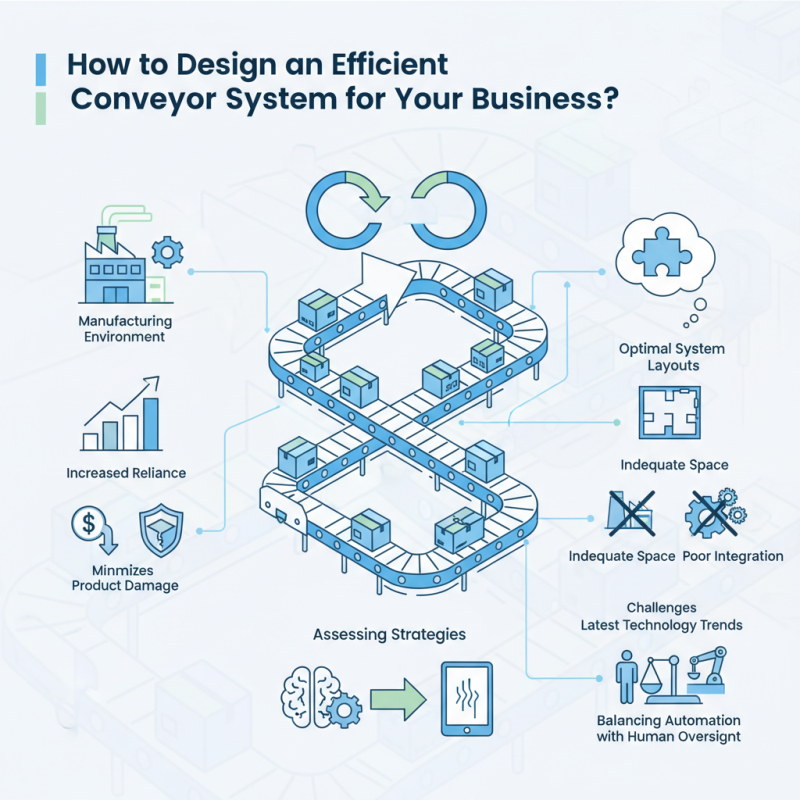
In today's fast-paced manufacturing environment, Conveyor System Design plays a crucial role in operational efficiency. According to a report by Modern Materials Handling, 82% of businesses have increased their reliance on automated conveyor systems to streamline workflows. This shift highlights the need for effective design strategies tailored to specific business needs.
An efficient conveyor system not only reduces labor costs but also minimizes product damage. For instance, manufacturers can cut operational costs by up to 30% through optimal system layouts. However, many companies still face challenges in achieving the ideal design. Factors like inadequate space and poor integration with existing processes often lead to inefficiencies.
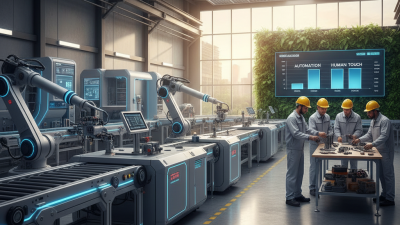
Businesses must continually assess their conveyor design strategies to meet evolving industry demands. Staying updated with the latest technology trends can enhance productivity but requires careful consideration of design elements. Balancing automation with human oversight remains a nuanced task. Reflecting on these aspects can lead to improvements in both design and functionality.
Understanding the Basics of Conveyor Systems
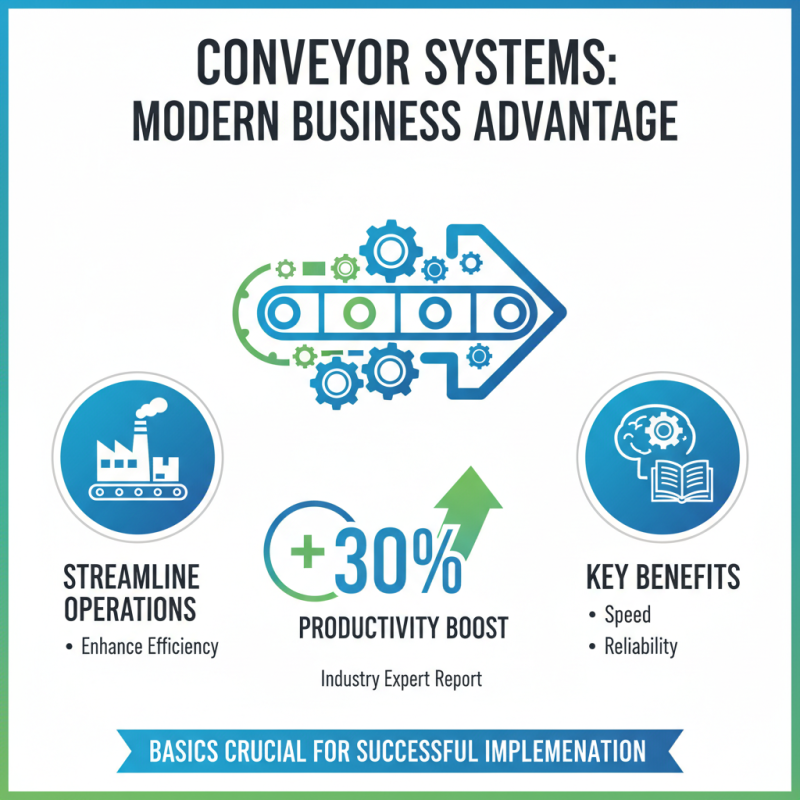
Conveyor systems are vital for modern businesses. They streamline operations and enhance efficiency in various industries. A well-designed conveyor can boost productivity by 30% or more, as reported by industry experts. Understanding the basics is crucial for successful implementation.
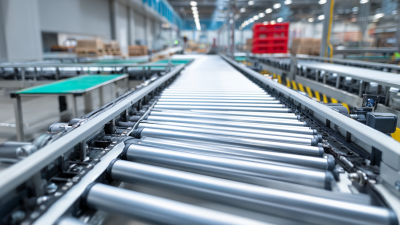
Different types of conveyor systems exist: belt, roller, and chain conveyors. Each type serves specific needs. For example, belt conveyors are great for moving bulk materials. Roller conveyors excel in handling packages. Chain conveyors are robust and suited for heavy loads. Businesses must consider these factors when choosing a system.
However, common mistakes can hinder efficiency. Overloading systems can cause failures. Neglecting maintenance can lead to breakdowns. A thorough analysis ensures proper design. Data from recent surveys show that 40% of firms experience inefficiencies due to poor system choices. Reflecting on these points can lead to better decisions and improved operations.
Identifying Your Business Needs and Objectives
Identifying your business needs and objectives is crucial when designing an efficient conveyor system. Start by examining your current workflow. Are there bottlenecks? Are there areas where products frequently pile up? These questions can guide you in understanding what your system must accomplish.
Consider the types of products you handle. Are they heavy or fragile? Do they require special handling? The answers will impact the type of conveyor you need. You may find that a standard roller system is inadequate. Reflecting on these details will save you from costly mistakes later.
Lastly, think about your growth plans. Is your business expanding? If so, your conveyor system should be flexible to accommodate future needs. It might be tempting to focus solely on current demands. However, overlooking potential growth can lead to inefficiencies down the line. The right system should evolve with your business.
How to Design an Efficient Conveyor System for Your Business
| Dimension |
Description |
Importance |
Estimated Cost ($) |
| Conveyor Length |
Total length of the conveyor system |
Affects the transport distance and speed |
5000 - 15000 |
| Weight Capacity |
Maximum weight the conveyor can handle |
Critical for safety and efficiency |
4000 - 12000 |
| Speed |
Speed at which products move on conveyor |
Impacts throughput and efficiency |
3000 - 8000 |
| Material Type |
Type of materials the conveyor will transport |
Determines design and durability requirements |
1000 - 3000 |
| Installation Cost |
Cost associated with installing the conveyor |
Essential for budget planning |
2000 - 5000 |
Selecting the Right Conveyor Type for Your Operations
When selecting the right conveyor type for your operations, consider your unique needs. Each business has different material types and volumes. A belt conveyor might suit bulk materials, but roller conveyors work better for hard goods. Analyze your workflow closely before making a choice.
Efficiency is not just about speed. It’s also about reliability and maintenance. Some conveyor systems may require frequent repairs, impacting productivity. Make sure to assess the long-term operational costs versus the initial investment. You don't want to end up with a system that is inefficient for your specific tasks.
Sometimes, businesses opt for a conveyor system because of trends, not needs. This can lead to issues in workflow and efficiency. It’s crucial to reflect on whether a standard solution meets your operational demands. Don’t shy away from customization. Tailored systems can resolve specific issues that off-the-shelf products cannot address.
Conveyor System Efficiency by Type
Designing for Efficiency: Layout and Flow Considerations
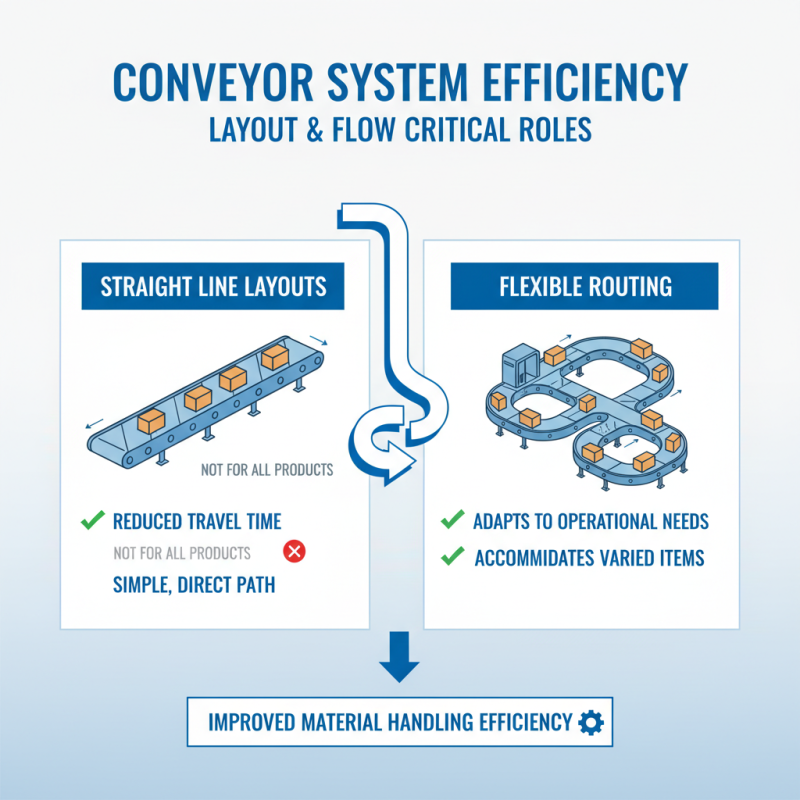
When designing an efficient conveyor system, layout and flow play critical roles. The physical arrangement of equipment can significantly affect material handling efficiency. For example, straight line layouts often reduce travel time. However, it is important to note that not all products suit this format. Some items require more flexible routing to accommodate operational needs.
Consider the flow of materials throughout the system. Poor flow leads to congestion and delays. Implementing curves in your layout can facilitate smoother transitions. Still, curves may increase wear on equipment. Additionally, establishing clear entry and exit points can enhance productivity. It’s vital to evaluate these aspects regularly.
Finding the right balance between efficiency and functionality is essential. It’s easy to overlook minor details, such as the height of the conveyor. A conveyor too high might hinder access for maintenance. Incorporating adjustable features could be beneficial. Reflecting on these points can help in identifying potential inefficiencies. Designing an effective conveyor system isn't just about initial setup; it's an ongoing process.
Implementing Safety and Maintenance Practices in Conveyor Design
Implementing safety and maintenance practices in conveyor system design is crucial. According to the Bureau of Labor Statistics, conveyor-related injuries account for 10% of workplace accidents. Thus, safety cannot be overlooked. Ensuring that your conveyor system meets safety regulations will protect your workers and reduce downtime.
Tip: Regular inspections should be part of your routine. Check for wear and tear, especially on belts and rollers. This can prevent larger issues and extend the lifespan of your equipment. Implementing a system of scheduled maintenance can help identify risks before they become problems.
Training staff on safe operation is essential. Inadequate training leads to risky behaviors, which can cause injuries. Encourage team members to report hazards without fear of reprisal. Open communication fosters a culture of safety.
Tip: Visual aids like posters can reinforce safety protocols. Display clear instructions near operational areas. Safety is a shared responsibility; everyone should be involved in promoting a safer workplace. Reflect on your current practices and make necessary adjustments to enhance safety and effectiveness.