Leave Your Message
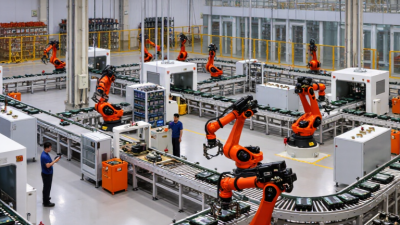
Assembly Conveyor Systems move products through repeatable production steps, from component placement to inspection and packaging. They connect workstations, reduce unnecessary handling, and help teams maintain a steady production rhythm. The movement looks simple. In practice, every transfer depends on timing, spacing, load weight, and operator access.
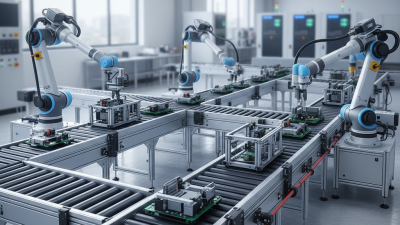
A typical system uses a conveyor frame, drive motor, belt or rollers, sensors, controls, and workstation fixtures. Products travel along a defined route while employees or automated tools complete specific tasks. Sensors can detect product positions and signal the conveyor to stop, advance, or divert items. This controlled flow supports consistent quality and makes production data easier to track.
Reliable design begins with the product itself. Its size, surface, weight, and assembly sequence influence conveyor speed and layout. A heavy metal housing may need powered rollers, while a delicate plastic part may require a softer belt and gentler acceleration. Safety guarding, emergency stops, and clear maintenance access are equally important. These details are not decorative; they affect daily performance and worker confidence.
Yet no line is perfect. A poorly placed sensor can create repeated pauses, and an overly fast conveyor can increase errors. Small gaps matter. Engineers usually test the system under real operating conditions before final approval. They observe jams, reach distances, changeover time, and product quality, then adjust the design. Understanding these practical limits makes it easier to select, operate, and improve Assembly Conveyor Systems for a specific manufacturing environment.
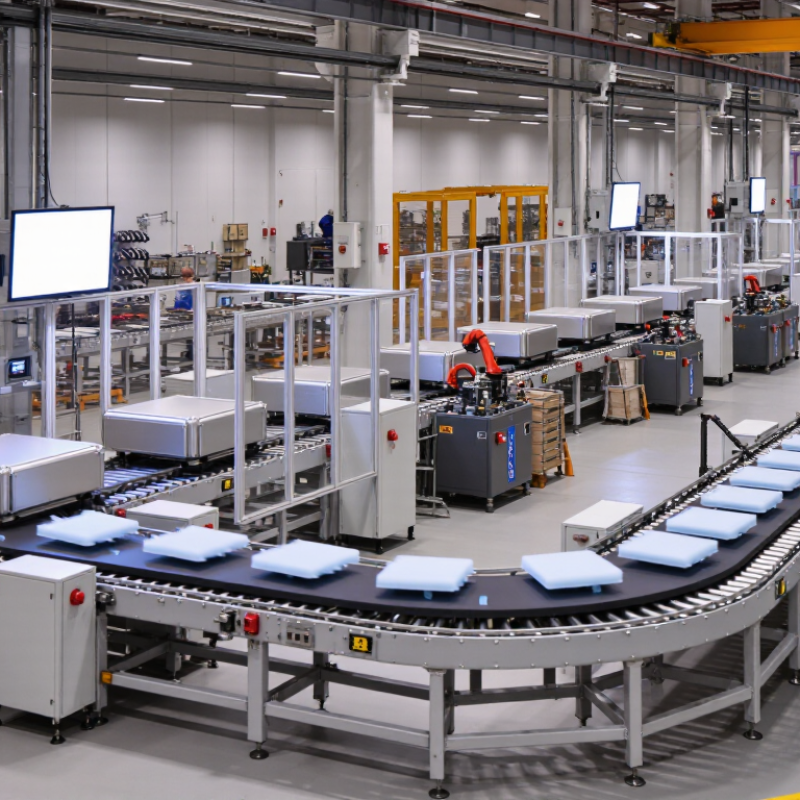
An assembly conveyor system is a powered material-handling setup designed to move parts between workstations. Its core purpose is to create a controlled, repeatable path for assembly operations. Instead of carrying components by hand, workers or robots receive parts at defined positions. This reduces unnecessary walking, uneven pacing, and misplaced items.
A typical system includes a conveyor frame, drive motor, belt or rollers, supports, sensors, and adjustable workstations. Some conveyors move continuously, while others stop at each station. A sensor may detect a product and trigger a brief pause. At that moment, an operator can tighten fasteners, connect wiring, or inspect a joint under consistent conditions. The system must match the product’s size, weight, surface, and required production speed.
In real facilities, conveyor performance depends on more than speed. Poor spacing can cause parts to collide. Excessive speed can also create fatigue and quality problems. Experienced engineers study cycle time, workstation reach, maintenance access, and worker safety before selecting a layout. They may add buffers when one station works slower than another. That decision is practical, but not always perfect. Product changes can make an efficient conveyor unsuitable later. Regular inspections, clear operating procedures, and measured adjustments help maintain reliable performance. Small details matter.
| System Element or Dimension | Definition or Typical Data | Core Purpose | How It Works | Common Applications |
|---|---|---|---|---|
| Assembly Conveyor System | A material-handling system that moves parts, subassemblies, or products between sequential assembly, inspection, testing, and packing operations. | To create a controlled and repeatable product flow while reducing manual carrying and unnecessary handling. | A powered or non-powered conveying surface transports workpieces along a defined route. Operators, tools, robots, and inspection stations perform assigned tasks at designated points. | Automotive components, appliances, electronics, industrial equipment, furniture, and general manufactured goods. |
| Conveyor Frame | Usually constructed from painted or powder-coated steel, stainless steel, or aluminum profiles, depending on load and environmental requirements. | Supports the conveyor bed, drive components, guides, sensors, and workstation equipment. | The frame maintains alignment and provides structural support across straight sections, curves, transfers, and elevation changes. | Standard production lines, cleanable areas, heavy-duty assembly cells, and modular workstation layouts. |
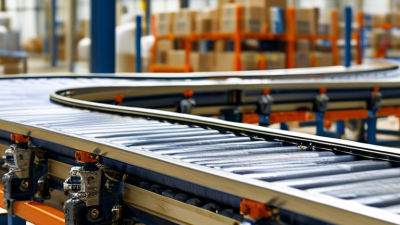
| Carrying Surface | Common formats include belting, linked plastic or metal chains, rollers, slats, pallets, and work carriers. | Provides a stable surface for transporting products or locating parts during assembly. | The surface receives motion from a drive mechanism and transfers that motion to the product, pallet, or carrier through friction, engagement, or gravity. | Belts for packaged or lightweight goods; slats and chains for durable products; pallets and carriers for controlled assembly positioning. |
| Drive Unit | Typically consists of an electric motor, gearbox, drive pulley or sprocket, couplings, and related control components. | Generates and regulates the force required to move the conveyor load. | The motor supplies torque to a pulley, sprocket, roller, or chain. A variable-frequency drive can adjust motor speed when process conditions require controlled movement. | Continuous production lines, indexing systems, accumulation conveyors, and lines with variable speed requirements. |
| Work Carrier or Pallet | A reusable platform, fixture, nest, or pallet designed to hold and locate a specific product or subassembly. | Improves repeatability, protects components, and presents the product in a consistent orientation. | The carrier travels with the product and may stop at an assembly station, transfer between conveyor sections, or interact with locating pins and clamps. | Precision assembly, testing, inspection, fastening, dispensing, and applications involving varied product orientations. |
| Indexing or Stop-and-Go Operation | A conveying mode in which products move for a defined distance and stop at programmed work positions. | Provides time and positional accuracy for manual or automated operations. | Sensors detect the carrier or product, while a controller commands the drive, stopper, brake, or locating mechanism to achieve a repeatable station position. | Screwdriving, welding, pressing, component insertion, labeling, testing, and robotic assembly. |
| Continuous-Motion Operation | A mode in which products move at a relatively steady speed while work is performed during travel or at flowing workstations. | Supports smooth product flow and can reduce stopping and restarting between operations. | The conveyor maintains a controlled linear speed. Operators or automated tools are synchronized with the moving product when the process permits. | Light assembly, visual inspection, product transfer, packaging preparation, and high-flow operations. |
| Accumulation Zone | A section that temporarily stores products or carriers without stopping the entire upstream conveyor. | Buffers differences in workstation cycle times and helps maintain line availability. | Zones are controlled by sensors, rollers, belts, or chain sections. A controller releases products when the downstream area is ready. | Assembly lines with multiple stations, testing areas, packing interfaces, and processes with variable cycle times. |
| Sensors and Controls | Common devices include photoelectric sensors, proximity sensors, encoders, safety switches, programmable controllers, and operator interfaces. | Coordinates movement, detects product presence, monitors faults, and supports safe operation. | Input signals are evaluated by a control system, which can start or stop drives, activate stops and transfers, track carriers, and report abnormal conditions. | Automated assembly, product tracking, station interlocking, jam detection, quality checks, and line safety functions. |
| Transfer Mechanism | Devices such as lift-and-carry units, pop-up rollers, turntables, cross transfers, and diverters move products between conveyor paths. | Allows a line to change direction, bypass a station, merge flows, or connect parallel processes. | A mechanical actuator temporarily raises, rotates, redirects, or pushes the product or carrier while control logic coordinates the transfer timing. | U-shaped lines, parallel work cells, inspection bypasses, sorting points, and multi-level production layouts. |
| Workstation Integration | May include adjustable tables, ergonomic fixtures, tool balancers, lighting, scanners, fasteners, and process equipment. | Combines product transport with the specific manual or automated assembly task performed at each station. | The conveyor delivers the product to a defined position, while the workstation provides access, tooling, utilities, and process controls for the operator or machine. | Manual assembly cells, semi-automated lines, kitting stations, torque-controlled fastening, and inspection stations. |
| Safety Features | Typical safeguards include emergency-stop devices, fixed guards, interlocked access doors, protective barriers, and safety-rated control circuits. | Reduces exposure to moving parts, unexpected starts, pinch points, and other foreseeable hazards. | When a safety device is activated, the control system removes or prevents hazardous motion according to the machine risk assessment and applicable safety requirements. | All powered conveyor systems, especially lines with robots, automated tooling, transfers, and operator access points. |
| Key Performance Measures | Common measures include line speed, cycle time, throughput, uptime, product spacing, load capacity, positioning accuracy, and changeover time. | Shows whether the conveyor supports the required production rate, quality level, and operational flexibility. | Performance is monitored through production records, sensors, control-system data, inspections, and maintenance reports. Actual values depend on product weight, layout, process time, and equipment design. | Capacity planning, line balancing, preventive maintenance, continuous improvement, and equipment selection. |
Note: Actual conveyor speed, load capacity, throughput, and positioning accuracy depend on the conveyor design, product characteristics, workstation cycle time, controls, and operating environment.