Choosing the right conveyor can shape an entire material-handling operation. Automation Conveyor Systems move products steadily, reduce repetitive labor, and support more consistent production. However, the best choice depends on product size, weight, speed, layout, and cleaning requirements.
This guide examines the top 10 types of automation conveyor systems available to buyers. It covers belt, roller, chain, slat, screw, overhead, flexible, pneumatic, modular, and vertical conveyor designs. Each system serves a different purpose. A belt conveyor may carry packaged goods smoothly across a warehouse. A powered roller conveyor can handle cartons near a shipping station. A vertical conveyor saves valuable floor space between production levels.
Real installations often reveal details that catalogs miss. Dust, uneven floors, sharp product edges, and frequent washdowns can affect performance. Maintenance access matters, too. A low-cost conveyor may become expensive when belts, sensors, or motors require frequent replacement. That lesson is easy to overlook.
Reliable selection requires more than comparing purchase prices. Buyers should review load capacity, control compatibility, safety features, spare-part availability, and supplier support. Experienced integrators can help match equipment with actual workflow conditions. Still, specifications should be verified on-site whenever possible. A system that performs well in one facility may struggle in another.
This overview is designed to support practical, informed purchasing decisions. Some options may appear similar. Their long-term results may differ greatly.
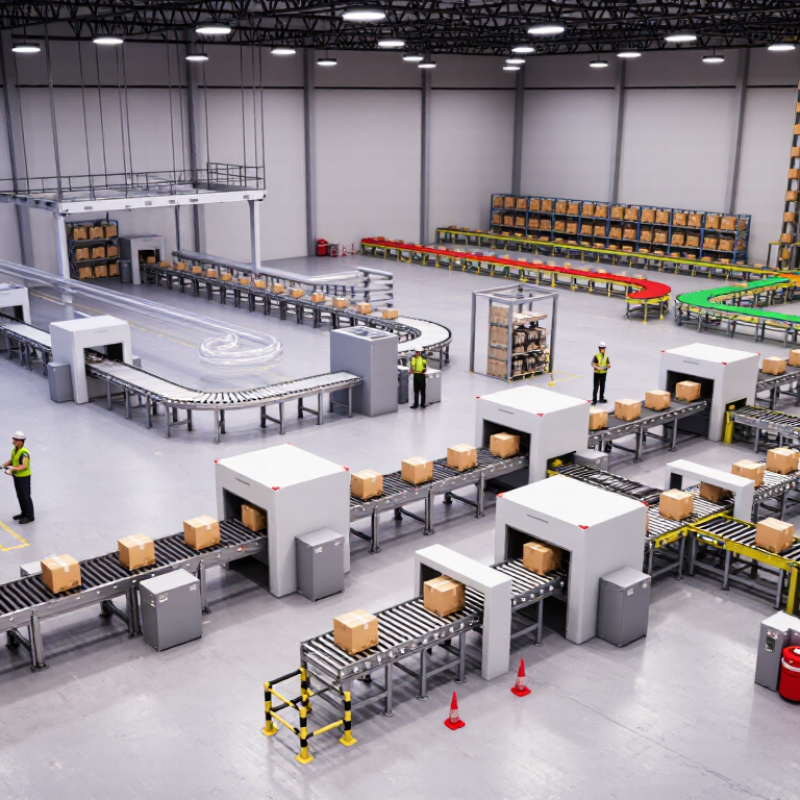
Top 10 Types of Automation Conveyor Systems to Buy
Automation conveyor systems move products with programmed control, sensors, and mechanical equipment. They reduce manual handling and create a steady material flow. Common types include belt, roller, chain, cleated, screw, overhead, pallet, flexible, accumulation, and sorting conveyors.
Here is how they work. A motor drives the belt, rollers, or chain through a gearbox. Photoelectric sensors detect each package, while a programmable controller adjusts movement. Variable-speed drives can slow products near packing stations. Diverts, stops, and sorters then guide items toward different destinations. A 40-centimeter carton may pause when the next station is occupied. This prevents collisions and product damage.
The conveyor structure must match the load, surface, distance, and working environment. Belt systems suit sealed cartons and irregular packages. Roller conveyors handle firm boxes with stable bases. Chain conveyors support heavier pallets, while overhead systems save floor space. Safety guards, emergency stops, and interlocks protect operators during operation and maintenance.
The details matter.
A common design mistake is choosing speed before studying product flow. High speed can create gaps, jams, and noisy transfers. Poor sensor placement causes similar trouble. Regular cleaning, belt tracking checks, and motor inspections improve reliability. Still, no system fits every facility. A simpler conveyor may work better than an advanced sorter when volumes change often. Designers should test real products, not only drawings, before purchasing equipment.
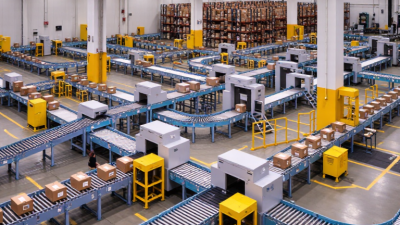
Top 10 Types of Automation Conveyor Systems to Buy
Choosing between belt, roller, chain, slat, overhead, screw, vibrating, bucket, pneumatic, and flexible conveyors requires more than comparing prices. Start with the load: weight, dimensions, surface, temperature, and cleanliness. A 25-kilogram carton needs different support from a fragile glass container. Check speed and throughput together. A fast conveyor is useless if upstream equipment creates regular bottlenecks.
Controls matter.
Request details on sensors, variable-speed drives, programmable logic controller compatibility, and data access. Deloitte’s 2024 Smart Manufacturing Survey found that 86% of industry leaders expect smart manufacturing to become a major competitiveness driver within five years. That makes integration a purchasing issue, not a future luxury. Also compare accumulation zones, transfer points, noise, guarding, emergency stops, and maintenance access. Operators should reach a motor without climbing around a loaded line.
Energy use deserves closer attention. MHI’s 2024 Annual Industry Report identified labor shortages and changing customer expectations as continuing supply-chain pressures, strengthening the case for reliable automation. Still, I would not accept every projected return on investment. Ask for measured cycle times, documented downtime, spare-parts lead times, and reference installations with similar loads. Include cleaning requirements and floor conditions. A system that performs well in a demonstration may struggle with dust, moisture, uneven pallets, or frequent product changes. Leave room for mistakes. Design reviews often overlook manual work at loading and unloading points.
| Rank | Conveyor System Type | Typical Applications | Load Capacity Range | Typical Speed Range | Key Automation Features | Space and Layout Advantages | Maintenance Considerations | Best Buying Criteria |
|---|---|---|---|---|---|---|---|---|
| 1 | Belt Conveyor | Cartons, packaged goods, totes, bags, and general material handling | Up to approximately 150 kg per meter, depending on belt width and frame design | 0.1–2.5 m/s | Variable-speed drives, photoelectric sensors, accumulation zones, adjustable guides, and automatic start/stop controls | Simple straight-line layout; can be configured with inclines, declines, curves, and transfers | Inspect belt tracking, tension, pulleys, bearings, and belt cleanliness; remove product buildup regularly | Compare belt material, belt width, load distribution, incline angle, speed control, and sanitation requirements |
| 2 | Roller Conveyor | Pallets, rigid cartons, containers, and heavy unit loads | Approximately 50–2,000 kg per meter, based on roller size and spacing | 0.1–1.5 m/s | Powered zones, zero-pressure accumulation, pop-up transfers, barcode scanning, and programmable logic control | Strong modular design; suitable for accumulation and pallet-handling lines | Check roller bearings, drive chains or belts, alignment, and accumulation sensors | Compare roller diameter, roller pitch, frame strength, accumulation method, and load stability |
| 3 | Motorized Roller Conveyor | Order fulfillment, distribution centers, case handling, and sortation systems | Approximately 30–1,000 kg per meter, depending on roller configuration | 0.1–2.0 m/s | 24-volt zone control, individual motorized zones, sensor-based accumulation, network monitoring, and energy-saving idle mode | Independent zones provide flexible accumulation and efficient use of floor space | Inspect motorized rollers, connectors, sensors, control modules, and product tracking accuracy | Compare zone length, control architecture, motor torque, noise level, safety functions, and spare-part availability |
| 4 | Chain Conveyor | Pallets, metal containers, fixtures, and products with solid or uneven bases | Approximately 250–2,500 kg per meter | 0.05–0.6 m/s | Indexing, positioning stops, pallet detection, lifting transfers, and synchronized drive control | Handles heavy loads and can operate in harsh industrial environments | Lubricate and inspect chains, sprockets, shafts, guides, and drive tension; check for elongation | Compare chain type, strand configuration, load rating, pallet compatibility, noise, and guarding requirements |
| 5 | Modular Plastic Belt Conveyor | Food, beverage, pharmaceutical, personal-care, and washdown applications | Approximately 50–300 kg per meter | 0.05–1.5 m/s | Variable speed, product spacing, side transfers, sanitation-friendly frames, sensors, and automated reject stations | Modular belts can follow curves and accommodate compact layouts with limited transfer gaps | Clean and inspect belt modules, sprockets, wear strips, and frame surfaces; follow hygiene procedures | Compare belt material, cleanability, chemical resistance, open-area design, transfer gap, and temperature range |
| 6 | Cleated Incline Conveyor | Moving loose materials, bags, boxes, and products between different elevations | Approximately 10–100 kg per meter, depending on incline and cleat design | 0.1–1.0 m/s | Adjustable cleat spacing, hopper loading, level sensors, variable-speed drive, and automatic feeding control | Saves floor space by using vertical elevation changes; can connect multiple process levels | Inspect cleats, belt tracking, transfer points, tension, and product rollback at the incline | Compare incline angle, cleat height and pitch, belt grip, product stability, discharge height, and guarding |
| 7 | Flexible or Expandable Conveyor | Temporary loading, unloading, truck bays, packing areas, and changing warehouse layouts | Approximately 15–75 kg per meter | 0.1–0.8 m/s | Variable length, powered or gravity operation, caster mobility, telescoping sections, and quick-connect controls | Can be extended, curved, folded, or relocated without permanent installation | Check casters, joints, rollers, flexible cables, brakes, and frame locking mechanisms | Compare extended and collapsed length, minimum curve radius, mobility, load rating, and electrical connection method |
| 8 | Overhead Trolley Conveyor | Garments, painted parts, automotive components, carcasses, and hanging products | Approximately 5–250 kg per trolley, depending on track and hanger design | 0.05–1.0 m/s | Variable speed, programmable stops, automatic routing, barcode or RFID tracking, and workstation synchronization | Uses overhead volume while keeping floor space available for people and equipment | Inspect track, trolleys, chains, drive units, hangers, lubrication points, and safety switches | Compare ceiling height, product hanger design, track load, routing flexibility, noise, and access for maintenance |
| 9 | Spiral Conveyor | Vertical transport of cartons, totes, trays, and packaged products | Approximately 10–100 kg per meter, depending on diameter and belt type | 0.1–0.8 m/s | Continuous vertical flow, accumulation control, photoelectric sensors, variable-speed operation, and line integration | Provides significant elevation change within a small floor footprint | Inspect belt or chain, wear strips, drive components, sensors, product containment, and emergency stops | Compare vertical rise, footprint, product dimensions, throughput, load orientation, and access for cleaning |
| 10 | Pallet Conveyor System | Manufacturing lines, automated storage, pallet buffering, assembly, and dispatch operations | Approximately 500–2,500 kg per pallet position | 0.05–0.5 m/s | Zero-pressure accumulation, pallet identification, lifts, turntables, transfers, safety scanners, and warehouse-control integration | Supports dense storage and repeatable pallet movement through complex layouts | Inspect chains or rollers, pallet sensors, transfers, stops, guides, guarding, and safety circuits | Compare pallet dimensions, load center, throughput, transfer type, accumulation strategy, safety zoning, and controls integration |
| Note: Capacity and speed figures are typical planning ranges rather than guaranteed performance values. Actual specifications depend on conveyor width, product dimensions, load distribution, incline, duty cycle, environmental conditions, guarding, and applicable safety requirements. | ||||||||
Automation conveyor systems solve different movement problems, not one universal task. Belt conveyors suit cartons, bags, and steady production lines. Roller conveyors handle rigid boxes and allow workers to inspect loads easily. Chain conveyors move heavy pallets through demanding areas. Slat conveyors support bottles, containers, and products needing stable spacing. Layout matters more than expected.
Screw conveyors transport powders, grains, and small bulk materials inside enclosed channels. Bucket elevators lift loose materials between floor levels with limited space. Overhead conveyors carry components above workers, leaving the floor available for assembly. Pneumatic conveyors move lightweight powders through sealed pipelines, reducing open exposure. They require careful airflow control. Too much speed can damage fragile material.
Vertical lift conveyors connect different elevations for cartons or pallets. They can reduce walking and simplify multi-level storage. Modular belt conveyors manage curved paths and products with uneven surfaces. Their cleanable construction helps in food-related environments, when suitable materials and procedures are used. Selecting a system requires checking load weight, product shape, speed, noise, cleaning needs, and maintenance access. In real installations, small details cause delays: poor transfer height, weak guarding, or a sensor placed too far from the product. No system is perfect. A trial run often reveals more than a polished specification sheet. Testing actual loads remains essential before purchase.
Choosing among the top 10 automation conveyor systems starts with the material, not the machine. Belt conveyors suit cartons, packaged goods, and gentle continuous movement. Roller conveyors handle rigid boxes and pallet loads, especially where accumulation is needed. Chain conveyors tolerate heavy pallets, but they can mark fragile surfaces.
For powders or small particles, screw conveyors offer enclosed transport and controlled feeding. Pneumatic systems reduce floor congestion, yet they may damage delicate products or consume significant energy. Vibrating conveyors work well with dry, loose materials. Cleated belts help move products uphill without sliding. Bucket conveyors support vertical lifting, while overhead conveyors save floor space during assembly or finishing operations.
The operation changes the decision. A washdown area needs corrosion-resistant construction and accessible cleaning points. High-speed sorting requires accurate sensors, stable belt tracking, and controlled spacing. Hot materials demand heat-resistant components and safe guarding.
In plant reviews, I check load weight, moisture, temperature, incline, speed, and cleaning frequency before recommending a layout. Small details matter. A narrow transfer gap can stop production.
The first design is rarely perfect. I still challenge my own assumptions when product shape or staffing changes. Maintenance access must remain practical, because a technically impressive conveyor can become unreliable when routine service is difficult.
The ten common choices include belt, roller, chain, slat, screw, overhead, vertical, vibratory, pneumatic, and flexible conveyors. Selection should begin with the product, not the catalogue. A fragile package may need a belt conveyor with controlled acceleration. Hot, oily parts may require slat or chain construction. Vertical conveyors save floor space, but they demand stronger guarding and careful load control.
OSHA guidance highlights nip points, moving parts, and emergency-stop access as major machine-safety concerns. Guards must remain practical for cleaning and inspection. A guard nobody can remove safely becomes a maintenance problem.
Integration also affects the real purchase cost. Controls should communicate with scanners, sensors, robots, and warehouse software through agreed protocols. MHI’s 2024 Annual Industry Report found that 55% of surveyed supply-chain leaders planned to increase investment in robotics and automation. That investment still needs a realistic maintenance plan.
Spare belts, rollers, bearings, and sensors should be locally available. Predictive monitoring can detect rising vibration or motor temperature before a stoppage.
Yet sensors are not magic. Dirty photoeyes still cause embarrassing failures.
TCO calculations should include installation, training, energy, downtime, software updates, and planned replacement. A cheaper conveyor can cost more after one difficult repair. I would also test the complete line with real cartons, uneven loads, and rushed operators. No system is perfect. The design should make mistakes visible, recoverable, and less dangerous.